Your Nipples Deserve Better: Managing Breastfeeding and Pumping
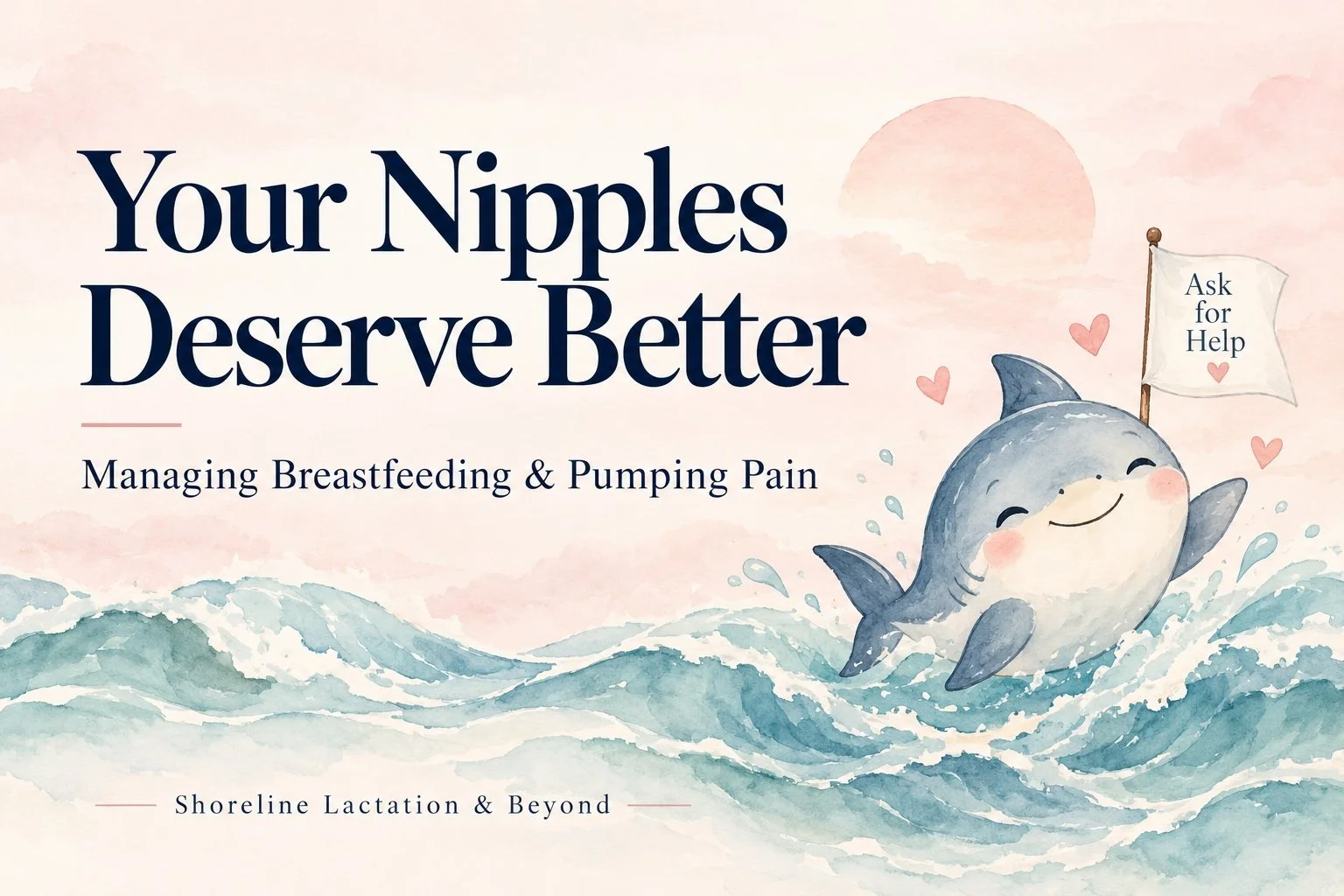
You pictured sweet newborn snuggles. Maybe a cozy chair, a peaceful feeding, and a little baby gazing lovingly up at you.
Instead, you’re gripping the couch cushion, holding your breath, and wondering how the sweet little baby in your arms has transformed into a tiny, toothless shark—and your nipples are apparently the catch of the day.
If you’ve cried through a feeding, you are not alone. And while we can find a little humor in the chaos, your pain deserves to be taken seriously.
You do not have to earn your breastfeeding badge through suffering. There is no badge. There is, however, probably a cold cup of coffee somewhere that you deserve to finish.
“Isn’t it supposed to hurt at first?”
Some tenderness can happen in the early days. But persistent pain, cracking, bleeding, or wincing through every feeding is a reason to wave the white flag and get help!
Your nipples do not need to “toughen up.” They are feeding a baby, not training for a wilderness survival competition.
And asking for help doesn’t mean you’re giving up. It means you deserve a feeding experience that doesn’t require a pep talk before every latch.
First, let’s investigate the latch
A shallow latch can compress your nipple instead of allowing it to sit comfortably farther back in your baby’s mouth.
One clue? Your nipple comes out flattened, creased, or looking like a brand-new lipstick.
Lovely shape for makeup. Less lovely for a body part.
Small adjustments to positioning and attachment can help. And if someone has told you, “The latch looks great,” but you’re still hurting, that deserves another look. How it feels matters, too.
Your pump should not feel like an enemy
Let’s clear something up: the highest suction setting is not a personal achievement. You do not get extra credit for surviving level 12.
If pumping causes rubbing, pinching, bruising, swelling, or cracking, your flange fit and settings need a closer look. Watching a pumping session can help identify what needs adjusting.
Have your pump handy during our visit. All its parts, too—even the mystery piece you’ve been leaving on the drying rack.
Before you buy the entire nipple-care aisle…
When you’re hurting, it’s tempting to order every cream, cup, pad, and product recommended by someone on the internet at 2 a.m.
Understandable. That is a vulnerable shopping hour.
But nipple pain has several possible causes, including latch-related injury, pump friction, skin irritation, and vasospasm. Infection can also occur. The treatment needs to match the cause; burning pain alone does not tell us which one it is.
A cream cannot fix ongoing compression, and adding more products can sometimes irritate already-sensitive skin. Prescription ointments and antifungal treatments deserve an assessment first.
A little kindness for your nipples
While you arrange support, here are a few ways to care for yourself:
Change damp breast pads. Your nipples have enough going on without spending the afternoon in wet laundry.
Wear a comfortable, well-fitting bra. Aim for support without rubbing or squeezing.
Skip scrubbing and irritating products. This is delicate skin, not a casserole dish.
Mention pain after feeds, too. Burning or throbbing with white, purple, or red nipple color changes—especially when cold—may suggest vasospasm. Gentle warmth may help, and ongoing symptoms need assessment.
If you’re crying before the next feeding
You deserve a plan that considers you, too. If nursing feels unbearable, hand expression or comfortable pumping may provide a temporary option while you get help. Together, we can work out how to keep your baby fed and support your milk supply while addressing the pain. If pumping hurts as well, we need to assess that setup.
Needing a different approach does not mean you’ve failed. It means the current approach needs some help.
When it’s time to call
Reach out promptly for pain at every feeding, cracked or bleeding nipples, or discomfort that isn’t improving. You don’t have to wait until things are “bad enough.”
Contact your medical provider promptly if you develop fever, chills, flu-like symptoms, a hot or swollen breast, spreading redness, or worsening pain. Those symptoms need medical attention.
Let’s make feeding feel better
At Shoreline Lactation & Beyond, I help families troubleshoot painful latch, pumping discomfort, and flange fit, with a plan built around their feeding goals.
You can show up tired. You can cry. You can tell me you love your baby and would also really appreciate nobody touching your nipples for five minutes.
You don’t need to have it all together before asking for help.
Book a consultation, and let’s give your nipples the support they’ve been politely—and perhaps now loudly—requesting.
By Lindsay Leighton-Smith, APRN, NNP-BC, IBCLC
Shoreline Lactation & Beyond
This post provides general education and does not replace individualized medical care.
Sources: NHS, “Sore or cracked nipples” and “Breast pain and breastfeeding”; Academy of Breastfeeding Medicine, Clinical Protocol #26.